


The moment you conceive, you need to make several lifestyle changes to have a healthy pregnancy. Eating healthy and balanced meals is the most important change. At the same time, you should know which habits, foods and beverages to avoid as they can be detrimental to your and your baby’s health. You have to be extremely careful, especially during the first trimester of pregnancy.
Intrigued to know which foods and drinks you should handle cautiously after you learn that you’re pregnant? Then here’s every would-be-mommy’s guide to eating right.
What Can Cause Miscarriage in Early Pregnancy?
Every couple dreaming of becoming parents want to have a smooth pregnancy devoid of complications. However, at least 10% of pregnancies result in miscarriage. Sometimes miscarriages happen because of preexisting health conditions (like irregular genes). However, in many cases, miscarriage can be avoided by being aware. Here are some common causes of miscarriages:
- Being overweight or underweight
- Being in late 30s or 40s
- Having chronic conditions such as diabetes
- Taking medications like NSAIDs (non-steroidal anti-inflammatory drugs), retinoids, and methotrexate
- Constantly remaining depressed
- Hormonal imbalances
- Having an incompetent cervix
In addition to these factors, what causes miscarriage? Some beverages and foods can be harmful for expecting moms and we have mentioned those in the next section.
Foods to Avoid During Pregnancy
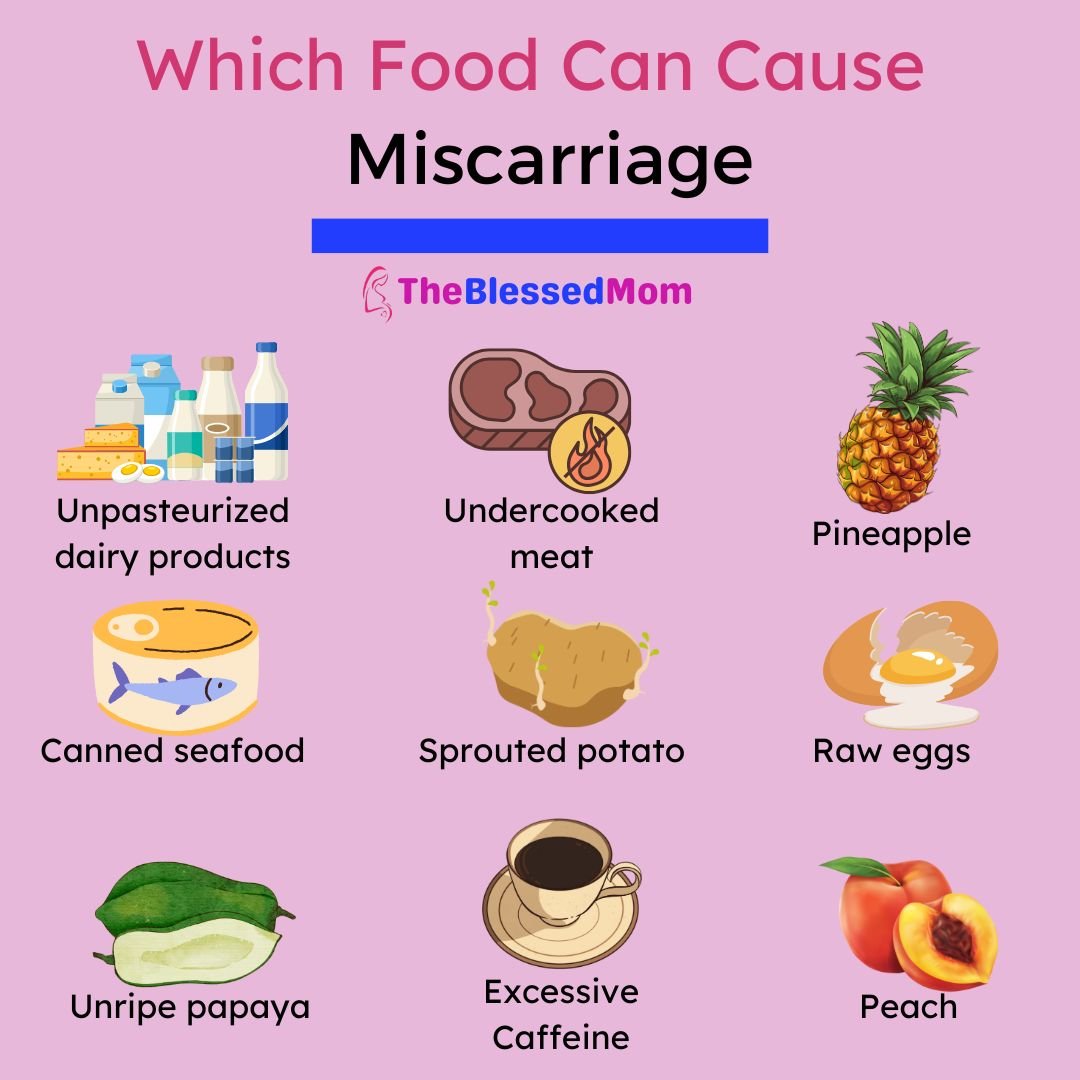
Everyone understands why pregnant women need to quit smoking and drinking. But did you know that several food items that are otherwise considered same and nutritious should also be avoided after conceiving? Scroll down to know about foods that can cause miscarriage.
1. Unpasteurized dairy products
Wondering which foods can cause miscarriage in first trimester? Unpasteurized milk is one of the miscarriage-inducing edibles as listeria, a dangerous bacterium, is found in unpasteurized milk. So, don’t take chances and boil milk properly before drinking it.
2. Undercooked meat
Eating certain foods like raw or undercooked meat comes with an increased risk of miscarriage. E. coli and toxoplasmosis can enter your body if you eat any kind of raw meat like chicken, beef, or mutton. Such bacteria can be responsible for infections and pregnancy loss.
3. Pineapple
Do you enjoy eating juicy fruits like pineapples? Then you have to ditch this luscious fruit for a while if you’re a mommie-to-be. During the first trimester, having pineapple or even pineapple juice can have dangerous consequences. It can lead to miscarriage. Interestingly, having pineapple during the third trimester is recommended by doctors as it has bromelain. Bromelain can be effective in inducing labor and making the delivery less painful.
4. Canned seafood
There are high chances of canned seafood being contaminated with harmful bacteria like listeria. Moreover, seafoods like swordfish, mackerel, crab, shark, and tilefish have mercury which is prohibited for expectant women. Hence, if canned seafood isn’t a part of your diet during pregnancy, you won’t have to worry about problems like stillbirth and miscarriage.
5. Sprouted potato
Many people don’t know eating sprouted potato is not at all good for health. The green sprout contains solanine which is a toxin. This toxin can adversely impact fetal growth and can even lead to a miscarriage. Even if you are not pregnant, having sprouted potatoes can make you sick. So, always discard the sprouted potatoes.
6. Raw eggs
Pregnant women should also stay away from undercooked or raw eggs. That’s because raw eggs can expose us to salmonella. Salmonella infection can cause various complications for the fetus and severe illness for the mother.
7. Unripe papaya
Unripe papaya is one of the things that can cause a miscarriage in the first 8 weeks. Let’s understand why:
Pepsin and papain are two enzymes present in unripe papaya and they can cause harm to the fetus. Papaya also exerts pressure on the mother’s uterus and so, increases the risk of miscarriage. Additionally, consumption of raw papaya can be linked with placental bleeding or internal bleeding. Lastly, the concentration of latex in papayas is quite high in raw papayas, and so, having them can cause uterine contractions.
Note:
Ripe papaya is safe for expecting moms, and you can have it in moderation. As it’s loaded with nutrients, it will aid the baby’s development.
8. Peach
Peach is another food that you cannot eat during pregnancy as it may cause internal bleeding. This sweet fruit’s shell hair is the culprit as it’s extremely dangerous. For people who aren’t pregnant, the shell hair causes an itching or burning sensation in the throat. Pregnant women may experience allergic reactions, even miscarriage.
There are various other foods that may not cause miscarriage but should still be avoided. For instance, it is better to have spicy foods in moderation as there will be side effects like heartburn, diarrhea, acidity, etc. If the food you’ve ordered is stale, you may have food poisoning.
Similarly, eating fruits and vegetables without washing them means exposing your body to pesticides, parasites, and bacteria. Even some herbal teas like peppermint tea and chamomile tea can impact your pregnancy negatively.
To Sum Up
So, remember that the outcome of your pregnancy will depend on lifestyle and diet. Besides avoiding the foods listed above, an expectant woman should maintain a balanced, nutrient-rich diet. Therefore, eat well, stay happy, and visit your gynecologist for regular check-ups.
References:
15 Foods and Beverages to Avoid During Pregnancy
Which Food Can Cause Miscarriage? – Memon Medical Institute Hospital


